Course Code: SPM
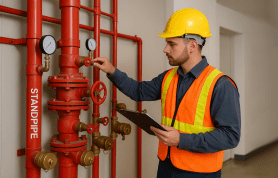
The Standpipe Systems Maintenance course provides students with an in-depth understanding of the design, function, and maintenance requirements of standpipe systems used in buildings for firefighting operations. This course is based on the National Fire Protection Association (NFPA) standards and New York City Fire Department (FDNY) regulations that ensure the safety and readiness of these critical life-safety systems.
Students will learn how to perform regular inspections, testing, and maintenance to keep standpipe systems in compliance with local codes. The course also covers the operation of Class I, II, and III standpipe systems, identification of system components, pressure regulation, and emergency response procedures. Participants will gain the technical skills and legal knowledge required to maintain system integrity and protect both building occupants and first responders during emergencies.
What You Will Learn
• Fundamentals of standpipe system design and operation
• Standpipe classifications (Class I, II, and III)
• Inspection, testing, and maintenance procedures
• NFPA and FDNY standpipe code requirements
• Identification of valves, piping, and pressure devices
• Troubleshooting common system deficiencies
• Recordkeeping and documentation requirements
• Safety and emergency operation procedures
• Coordination with fire departments and first responders
• Fire prevention and system integrity management
Admission Requirements
1. Be at least eighteen (18) years of age.
2. Present a valid government-issued photo identification.
3. Submit a High School Diploma, High School Equivalency (GED). Applicants who do not possess a High School Diploma or GED must successfully pass the school’s Entrance Examination.
RESPONSIBILITY OF THE BUILDING OWNER: It shall be the building owner’s responsibility to maintain the standpipe system and to determine the individual qualifications and competencies of the COF holder that performs the functions related to inspection, testing and maintenance of such standpipe system.
Section : Morning 1 Week | Section : Afternoon 2 Weeks | Section: Evening 2 Weeks | Section: Weekend 4 Weeks |
||||
| Jan 16 | Monday-Thursday 9:00 AM-5:00 PM | Monday-Thursday 1:00 PM-4:30 PM | Monday-Thursday 6:00 PM-9:30 PM | Jan 28 | Saturday or Sunday 9:00 AM-5:00 PM | ||
| Feb 20 | Monday-Thursday 9:00 AM-5:00 PM | Monday-Thursday 1:00 PM-4:30 PM | Monday-Thursday 6:00 AM-9:30 PM | Feb 25 | Saturday or Sunday 9:00 AM-5:00 PM | ||
| Mar 31 | Monday-Thursday 9:00 AM-5:00 PM | Monday-Thursday 1:00 PM-4:30 PM | Monday-Thursday 6:00 AM-9:30 PM | Mar 18 | Saturday or Sunday 9:00 AM-5:00 PM | ||
| April 28 | Monday-Thursday 9:00 AM-5:00 PM | Monday-Thursday 1:00 PM-4:30 PM | Monday-Thursday 6:00 AM-9:30 PM | Apr 29 | Saturday or Sunday 9:00 AM-5:00 PM | ||
| May 26 | Monday-Thursday 9:00 AM-5:00 PM | Monday-Thursday 1:00 PM-4:30 PM | Monday-Thursday 6:00 AM-9:30 PM | May 27 | Saturday or Sunday 9:00 AM-5:00 PM | ||
| Jun 30 | Monday-Thursday 9:00 AM-5:00 PM | Monday-Thursday 1:00 PM-4:30 PM | Monday-Thursday 6:00 AM-9:30 PM | Jun 24 | Saturday or Sunday 9:00 AM-5:00 PM | ||
| Jul 28 | Monday-Thursday 9:00 AM-5:00 PM | Monday-Thursday 1:00 PM-4:30 PM | Monday-Thursday 6:00 AM-9:30 PM | Jul 29 | Saturday or Sunday 9:00 AM-5:00 PM | ||
| Aug 25 | Monday-Thursday 9:00 AM-5:00 PM | Monday-Thursday 1:00 PM-4:30 PM | Monday-Thursday 6:00 AM-9:30 PM | Aug 26 | Saturday or Sunday 9:00 AM-5:00 PM | ||
| Sep 30 | Monday-Thursday 9:00 AM-5:00 PM | Monday-Thursday 1:00 PM-4:30 PM | Monday-Thursday 6:00 AM-9:30 PM | Sep 30 | Saturday or Sunday 9:00 AM-5:00 PM | ||
| Oct 27 | Monday-Thursday 9:00 AM-5:00 PM | Monday-Thursday 1:00 PM-4:30 PM | Monday-Thursday 6:00 AM-9:30 PM | Oct 28 | Saturday or Sunday 9:00 AM-5:00 PM | ||
| Nov 24 | Monday-Thursday 9:00 AM-5:00 PM | Monday-Thursday 1:00 PM-4:30 PM | Monday-Thursday 6:00 AM-9:30 PM | Nov 25 | Saturday or Sunday 9:00 AM-5:00 PM | ||
| Dec 29 | Monday-Thursday 9:00 AM-5:00 PM | Monday-Thursday 1:00 PM-4:30 PM | Monday-Thursday 6:00 AM-9:30 PM | Dec 16 | Saturday or Sunday 9:00 AM-5:00 PM | ||
Tuition and Payment Options
Frequently Asked Questions
What is the Standpipe Systems Maintenance course?
It is technical training in standpipe system operation, inspection, testing, maintenance, safety, and documentation for building fire-protection systems.
What standpipe topics are covered?
Students study standpipe classes and types, water supplies, risers, hose connections, valves, pressure regulation, fire department connections, inspections, testing, and maintenance.
Does the course address FDNY requirements?
Yes. The curriculum introduces relevant FDNY inspection, maintenance, documentation, and fire-safety requirements. Agency eligibility and examination rules should be confirmed separately.
Are NFPA standards included?
Yes. The course introduces applicable NFPA concepts for standpipe inspection, testing, maintenance, and life safety.
Is practical training included?
The program combines technical instruction with practical knowledge of standpipe components, inspections, testing, deficiency recognition, and safe maintenance procedures.
Who should take Standpipe Systems Maintenance training?
The course is relevant to learners interested in building maintenance, facilities operations, fire safety, superintendent support, and related technical roles.
What are the admission requirements?
Applicants must be at least 18, present valid government-issued photo identification, and provide a high school diploma or GED, or pass the school entrance examination when applicable.
How long is the course?
The displayed schedule lists a one-week morning option, two-week afternoon and evening options, and a four-week weekend option. Contact IDI to verify current availability.
How much does the course cost?
The page lists a total cost of $1,500 and several payment options. Confirm current tuition, inclusions, and terms with IDI before enrolling.
Are payment plans available?
Yes. The page displays payment options for morning, afternoon, evening, and weekend schedules. Contact admissions for current terms.
Does completing the course guarantee certification?
No. Course completion does not guarantee an FDNY Certificate of Fitness, license, examination result, eligibility, or employment.
Where are standpipe systems commonly used?
Standpipe systems are commonly installed in multi-story and large buildings to provide fire department and occupant hose connections, subject to building and fire-code requirements.
What maintenance records are covered?
Students learn about inspection reports, testing records, impairment documentation, deficiency reporting, and maintenance logs.
How can I enroll?
Use the IDI pre-registration page or request program information, then contact admissions to confirm the next available section.